What Is Internet Computer (ICP)? A Beginner’s Guide
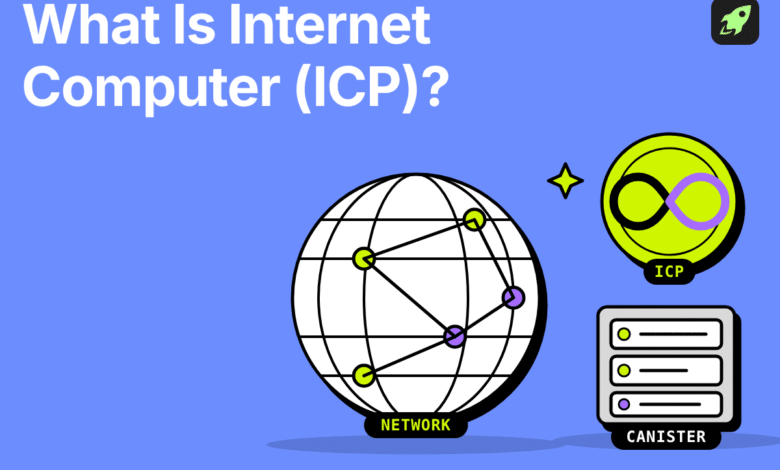
The Web Laptop is a blockchain community constructed to run full functions, not simply token transfers or small items of good contract logic. Its native token, ICP, pays for governance and, as soon as transformed into “cycles,” for the computing energy apps use.
This information explains what the Web Laptop is, how its nodes, subnets, and canisters work, how the community is ruled, what the ICP token does, and which dangers to bear in mind.
What Is Web Laptop (ICP)?
The Web Laptop is a layer-1 (L1) blockchain and computing community designed to host functions. Builders can use it to run backend code, retailer knowledge, and even serve web sites immediately from the community, with out counting on conventional cloud servers.
It’s vital to separate the community from its token. The Web Laptop is the platform. ICP is its native digital asset, used for governance, community rewards, and paying for computation. Folks typically say “ICP” for each, however the token isn’t the platform itself.
Who Developed Web Laptop?
The DFINITY Basis, a Zurich-based nonprofit based by Dominic Williams, is a serious developer of the Web Laptop. Williams started engaged on the idea in 2016, and the community’s public mainnet launched in Could 2021.
DFINITY nonetheless contributes a lot of the core protocol code, nevertheless it doesn’t management the community by itself. Protocol modifications undergo an on-chain governance system, and unbiased node suppliers run the community.
How Does Web Laptop Work?
The Web Laptop is constructed from 4 fundamental items: nodes, subnets, canister good contracts, and chain-key cryptography.
Nodes
Nodes are the bodily machines that run the community. Every node runs protocol software program referred to as a duplicate, which executes code and participates in consensus. Unbiased node suppliers personal and function these machines, normally in knowledge facilities, and obtain ICP rewards for supplying infrastructure.
Subnets
Nodes are grouped into subnets. Every subnet runs its personal blockchain and its personal occasion of the ICP consensus protocol. A canister lives on one subnet and is replicated throughout all nodes in that subnet, so each node holds a duplicate of its code and knowledge.
Subnets are how the community scales. As an alternative of constructing one chain do every part, the Web Laptop provides extra subnets to extend complete capability.
Canister Sensible Contracts
A canister is ICP’s model of a wise contract. It combines WebAssembly (Wasm) code with persistent state—the canister’s saved knowledge—and processes messages from customers or different canisters. Builders can write canisters in Motoko, a language created by DFINITY, or in Rust and different languages that compile to WebAssembly.
Canisters can maintain far more knowledge and run heavier logic than typical good contracts on networks like Ethereum. That’s what lets them act as full software backends.
Chain-Key Cryptography
Chain-key cryptography is a set of threshold cryptography strategies. Every node in a subnet holds solely a share of a non-public key. Collectively, the nodes can produce a legitimate signature, however no single node ever holds the whole key.
This lets a subnet signal its outcomes as a bunch. Purchasers can then examine a response with one public key as an alternative of trusting any particular person node. The identical method lets canisters signal transactions for different blockchains, which powers ICP’s cross-chain options.
Tips on how to Get Free Crypto
Easy methods to construct a worthwhile portfolio at zero value

How Does an ICP Software Work?
An ICP app can maintain its frontend, backend, and knowledge in canisters. That’s a functionality, not a rule: some apps use ICP for under a part of their stack and maintain different components on conventional servers.
Frontend Internet hosting
A canister can retailer and serve internet property, corresponding to HTML, JavaScript, and pictures, straight to a consumer’s browser. This implies an internet site may be hosted on the community itself somewhat than on a standard internet server.
Backend Execution
Backend canisters maintain the app’s enterprise logic. They obtain requests, run code, and might name different canisters. The subnet processes requests that change knowledge by way of consensus. Learn-only “question” calls may be answered by a single node, which makes them sooner and free.
Knowledge Storage
Canisters maintain their state in reminiscence that persists between calls, so an app’s knowledge lives on the community alongside its code. Storage is paid for in cycles, like computation.
A Consumer Request From Begin to End
Right here’s what occurs if you use a typical ICP app:
- Your browser masses the app’s frontend from a canister.
- You click on a button, and the frontend sends a message to a backend canister.
- If the request modifications knowledge, the subnet’s nodes agree on it by way of consensus, and the canister executes it.
- The subnet indicators the outcome with its chain-key signature.
- Your browser verifies that signature and exhibits the up to date outcome.
The app pays for this work in cycles. You don’t want to carry ICP or pay a transaction payment for every click on.
How Is Web Laptop Ruled?
The Web Laptop is ruled by the Community Nervous System (NNS), an on-chain governance system. The NNS decides on protocol and reproduction upgrades, creates and manages subnets, approves node suppliers, and units financial parameters just like the ICP-to-cycles conversion charge. Permitted modifications are carried out robotically.
NNS Neurons
To vote, ICP holders lock tokens in a neuron, which is the NNS’s governance voting unit. A neuron has a dissolve delay—the time it takes to unlock the staked ICP. Neurons with longer dissolve delays, and people who have existed longer, get extra voting energy. Neurons that vote can earn rewards in newly minted ICP.
Holders who don’t need to vote on each proposal can set their neuron to comply with different neurons, which then vote on their behalf.
NNS Proposals
Modifications to the community begin as NNS proposals. Anybody with an eligible neuron can submit one. Neurons then vote inside a set interval, and a proposal passes as soon as sufficient voting energy helps it. If a proposal is rejected, the proposer loses a payment, which discourages spam.
Software Governance By means of SNS
The Service Nervous System (SNS) is a framework that lets particular person apps undertake their very own governance. A venture can launch an SNS, promote or distribute its personal governance tokens, and hand management of its canisters to a decentralized autonomous group (DAO). Every SNS launch should be accepted by an NNS proposal. OpenChat, a messaging app, was among the many first tasks at hand management to an SNS DAO.
What Is the ICP Token Used For?
ICP has three fundamental jobs: governance, community rewards, and funding computation by way of cycles.
Staking and Community Rewards
Holders can stake ICP in NNS neurons to vote on proposals and earn voting rewards. It really works otherwise from typical crypto staking: rewards come from voting, not from validating blocks. Individually, node suppliers obtain ICP for working the machines that kind subnets. These two reward streams are the place newly issued ICP enters circulation.
Changing ICP Into Cycles
Canisters don’t spend ICP immediately for extraordinary computation. They spend cycles, a compute useful resource unit. Builders get cycles by sending ICP to the Cycles Minting Canister, a system canister that burns the ICP and mints cycles in return.
The protocol costs cycles in XDR, the Worldwide Financial Fund’s Particular Drawing Proper: one trillion cycles equals one XDR, in response to the ICP documentation. The NNS adjusts what number of cycles one ICP buys based mostly on ICP’s market value. This retains useful resource prices roughly predictable in XDR phrases, nevertheless it doesn’t repair ICP’s market value.
Reverse Fuel, Useful resource Prices, and Token Provide
On most blockchains, customers pay fuel charges for every transaction. ICP makes use of a “reverse fuel” mannequin as an alternative: canisters are funded with cycles and pay for the compute, storage, and messaging they use. Customers can work together with an app with out holding ICP. An app can nonetheless cost customers in its personal approach, corresponding to by way of subscriptions or in-app funds.
This creates two forces on provide. ICP is burned when it’s transformed into cycles, and new ICP is minted for voting and node-provider rewards. Whether or not complete provide rises or falls is determined by which aspect is bigger at any given time, so ICP isn’t inherently or at all times deflationary.
What Can Folks Construct on ICP?
The Web Laptop is designed for general-purpose apps, so the probabilities are broad.
Web sites Hosted on the Community
As a result of canisters can serve internet content material, builders can host full web sites on the community, from easy touchdown pages to interactive internet apps.
Functions With On-Chain Knowledge
Apps can maintain consumer knowledge and logic in canisters. Examples embody social apps, messaging, decentralized finance (DeFi) providers, and NFT platforms that retailer extra knowledge on-chain than is sensible on many different networks.
Neighborhood-Ruled Providers
With the SNS framework, a venture can hand its code and treasury management to its group. Token holders then vote on upgrades and spending, very similar to ICP holders do for the community.
How Does ICP Hook up with Different Blockchains?
ICP calls its method to interoperability Chain Fusion. Utilizing chain-key cryptography, canisters can maintain addresses and signal transactions for different blockchains. They will learn these chains’ state both by way of direct protocol integration or by way of HTTPS outcalls, which let canisters name exterior internet APIs. How a canister reads one other chain impacts what you must belief.
Bitcoin Integration
ICP has a direct integration with Bitcoin. Every node runs a Bitcoin adapter that connects to the Bitcoin peer-to-peer community, and a system canister tracks Bitcoin blocks and balances. Canisters can signal Bitcoin transactions utilizing threshold signatures, with none single node holding the important thing.
This additionally powers ckBTC, a token on ICP backed one-to-one by Bitcoin held by a minter canister. ckBTC works very similar to wrapped tokens, however ICP canisters management its backing somewhat than a third-party custodian.
Ethereum Integration
ICP doesn’t observe Ethereum immediately. As an alternative, canisters learn Ethereum by way of the EVM RPC canister, which by default queries at the very least three unbiased JSON-RPC suppliers and compares their solutions, in response to the ICP docs on Ethereum integration. Canisters signal Ethereum transactions with threshold ECDSA signatures. Tokens corresponding to ckETH additionally depend on a helper good contract on Ethereum.
RPC-Primarily based Entry
Each time a canister reads one other chain by way of RPC suppliers, it provides belief assumptions tied to these suppliers. Evaluating a number of suppliers reduces the chance that one dangerous or defective supplier skews the outcome, nevertheless it doesn’t take away that dependency utterly. Bitcoin’s direct integration avoids this further layer, which is the important thing distinction between the 2 fashions.
How Does ICP Examine With Ethereum?
| Web Laptop | Ethereum | |
| Predominant focus | Internet hosting full functions, together with frontends and knowledge | Settlement layer for good contracts and tokens |
| Sensible contract unit | Canisters working WebAssembly | Contracts working on the Ethereum Digital Machine |
| Predominant languages | Motoko, Rust, and different Wasm-compatible languages | Solidity, Vyper |
| Who pays for computation | Apps, utilizing cycles (reverse fuel) | Customers, paying fuel charges in ETH |
| Scaling method | Including subnets | Layer-2 networks on high of the primary chain |
| Governance | On-chain NNS voting with staked ICP | Off-chain group course of for protocol upgrades |
Ethereum has a a lot bigger developer group, extra DeFi exercise, and an extended monitor document. ICP gives extra storage and compute per contract and lets customers skip transaction charges, however its ecosystem is smaller.
What Are the Dangers and Limitations of ICP?
Canister Safety
Canisters can have bugs like some other code. Many canisters even have controllers—accounts that may improve or change them. That’s helpful for fixing issues, nevertheless it means customers should belief whoever controls the canister until management has been eliminated or handed to an SNS DAO.
Node Supplier Focus
Every subnet runs on a restricted set of nodes, and NNS governance should approve node suppliers. That’s a really completely different mannequin from networks the place anybody can run a validator. In NNS voting, a big share of voting energy has traditionally adopted neurons managed by DFINITY and some different well-known members, which some critics see as a centralization threat.
ICP Token Provide
ICP’s provide modifications with each minting and burning. If rewards outpace the ICP burned for cycles, provide grows. The token has additionally been extremely risky because it started buying and selling in 2021.
Adoption Uncertainty
The Web Laptop’s know-how is formidable, however its long-term worth is determined by whether or not builders and customers construct on it at scale. It competes with established blockchains and with conventional cloud suppliers, and its ecosystem remains to be small by comparability.
Ultimate Phrases
The Web Laptop is a blockchain community constructed to host full functions, with canisters working on subnets of unbiased nodes and secured by chain-key cryptography. The ICP token powers governance by way of the NNS, rewards node suppliers and voters, and converts into cycles that pay for computation. Earlier than shopping for ICP or constructing on the community, weigh its options towards its smaller ecosystem and governance trade-offs.
Need to add ICP to your portfolio? Purchase ICP on Changelly and obtain it immediately in your pockets.
Disclaimer: Please be aware that the contents of this text will not be monetary or investing recommendation. The data offered on this article is the writer’s opinion solely and shouldn’t be thought-about as providing buying and selling or investing suggestions. We don’t make any warranties concerning the completeness, reliability and accuracy of this data. The cryptocurrency market suffers from excessive volatility and occasional arbitrary actions. Any investor, dealer, or common crypto customers ought to analysis a number of viewpoints and be conversant in all native rules earlier than committing to an funding.