
Will Aave’s $21M bet on Bitcoin’s lending potential restore DeFi liquidity or create new risk?

One of many primary metrics to take a look at is liquidity.
With over 4% of USDT provide being eliminated in This autumn, value round $10 billion, there’s nonetheless not sufficient dry powder to verify that the market has hit backside. On this context, Aave’s determination to permit Bitcoin for use inside DeFi lending turns into much more impactful. Naturally, the query turns into — Can the transfer enhance capital inflows by permitting customers to make use of Bitcoin as collateral and due to this fact enhance stablecoin volumes?
In essence, might this be the a lot wanted catalyst for a DeFi resurgence?
Aave desires to unlock native Bitcoin as collateral
In a latest growth, Aave [AAVE] has gained DAO approval so as to add assist for utilizing Bitcoin as collateral.
The proposal will permit holders to lock up their BTC to borrow stablecoins. Notably, the proposal was unanimously authorized on ninth November. This implies Bitcoin holders can acquire new liquidity by means of Aave’s $21 million credit score market by borrowing stablecoins utilizing their BTC as collateral.
Because the chart beneath reveals, Aave shall be allocating $21 million to their credit score merchandise to 5 totally different stablecoins. The 2 largest stablecoins shall be USDT and USDC which have been allotted $8 million every. These account for nearly 76% of the whole capability.
In the meantime, AAVE’s native stablecoin GHO shall be allotted $1 million. The final $4 million shall be cut up evenly between USDG and RLUSD with $2 million allotted to every.
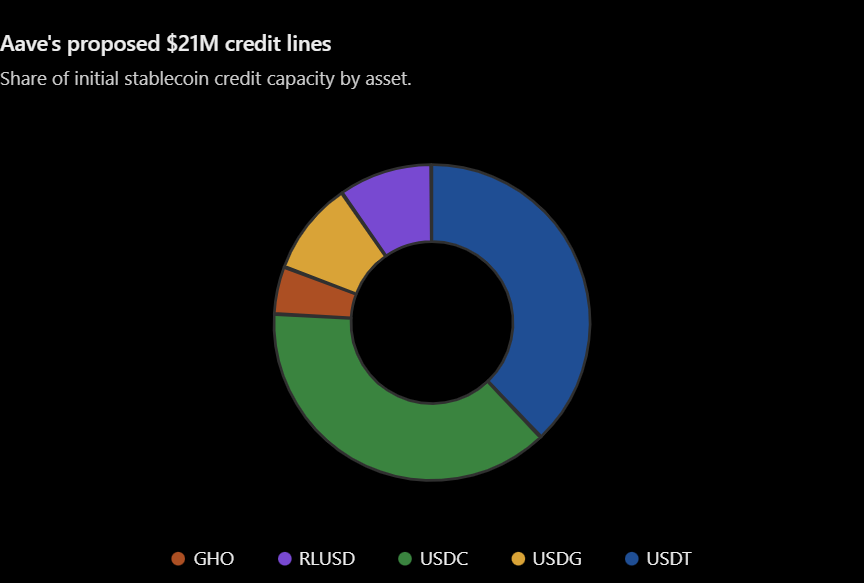
Why does this matter? Nicely, this allocation reveals that Aave is seeking to mix each conventional stablecoins and newer property to offer extra choices for borrowing. Consequently, this can permit Bitcoin holders to borrow in opposition to a number of stablecoin markets utilizing their BTC as collateral.
As Aave Founder and CEO Stani Kulechov defined,
The Babylon-built Bitcoin-backed market on Aave V4 reveals how simply new markets will be launched utilizing the Hub and Spoke mannequin. Native BTC collateral, with out wrappers or custodians, unlocks a serious new supply of liquidity for on-chain borrowing and lending.
Aave V4 bets on Bitcoin as DeFi lending demand weakens
Crypto lending is slowing down as debtors scale back their publicity amid market uncertainty.
In response to Galaxy Analysis, the general crypto-backed mortgage market fell by 16.78% throughout Q2, hitting a complete worth of $56.16 billion. That is the primary time that each one main lending sectors have fallen since 2022. DeFi lending additionally noticed a pointy fall, with whole energetic loans lowering from $47.13 billion to $21.94 billion between April and July. In brief, merchants have misplaced curiosity in borrowing in opposition to their property.
Nonetheless, Aave has seen an reverse development, with the platform noting all-time highs in energetic loans on the Aave V4 platform, rising by nearly 100% in Q2 to $500 million. In opposition to this backdrop, the addition of Bitcoin to the lending market might lend additional progress potential.
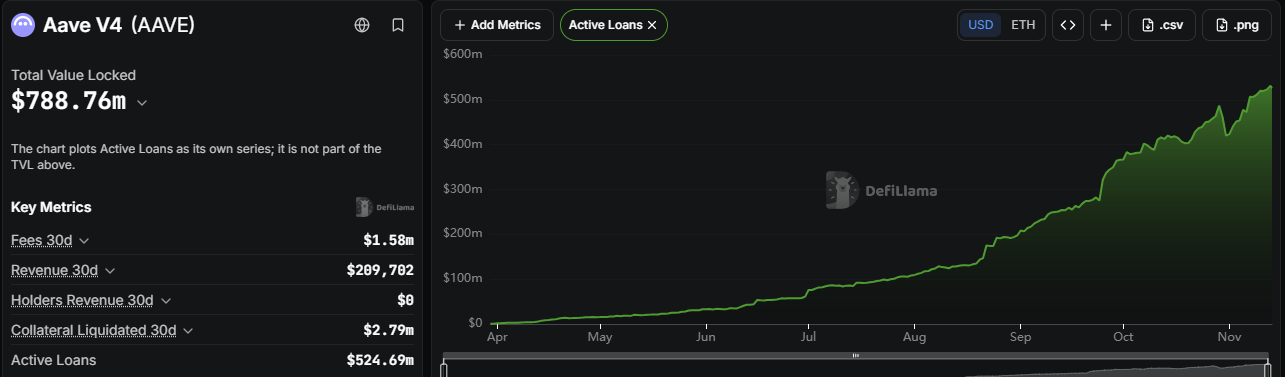
In essence, by permitting BTC holders to make use of their asset as collateral, the market might see extra capital flowing into DeFi, extra collateral on Aave, and extra demand for on-chain borrowing.
As Babylon defined,
Aave V4’s Hub-and-Spoke structure offers an remoted setting wherein integrations can deploy each commonplace and customized Spokes with out affecting different property on the Hub.
Bitcoin’s untapped lending market might give DeFi a liquidity increase
The crypto market is dealing with its worst liquidity crunch because the 2022 bear market.
The general stablecoin market cap has fallen by about $14 billion over the previous month. By tenth November, the whole stablecoin market cap was round $290 billion, based on DeFiLlama. In actual fact, the final two weeks alone noticed essentially the most internet stablecoin outflows ever in over 4 years. Over half of this drop got here from USDT and an extra 20% from USDC.
This strain will be seen throughout the DeFi area. In actual fact, the whole DeFi TVL fell to round $76.6 billion on twelfth November, with stablecoin market cap sitting at $286.9 billion at press time. Nonetheless, DeFi TVL additionally fell by 9.7% week-on-week.
In opposition to this backdrop, Aave’s transfer might provide a brand new supply of liquidity.
There may be one technical distinction value conserving although. This integration doesn’t robotically imply any new stablecoins will circulate into DeFi. As a substitute, debtors could have entry to liquidity that’s already sitting in Aave. For liquidity to develop, the protocol may also want to draw extra lenders and contemporary deposits.
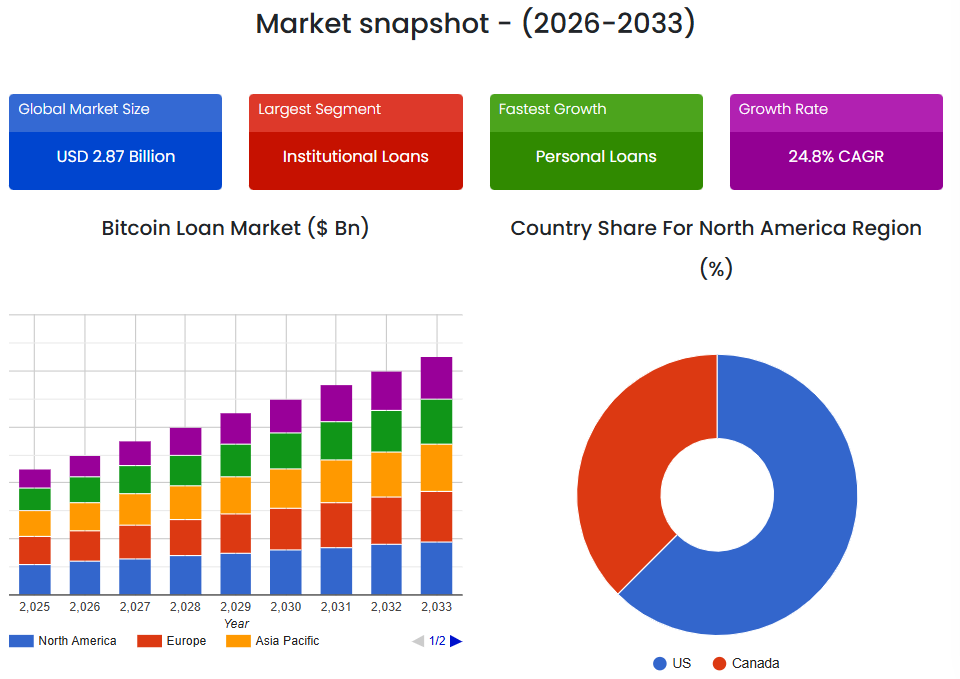
As per the connected chart, there’s nonetheless a protracted method to go earlier than the lending market on Bitcoin hits vital ranges.
BTC-backed loans reached $3.58 billion in 2025, representing simply 0.24% of Bitcoin’s market cap. So, by supporting Bitcoin as collateral, Aave might assist unlock this largely untapped lending demand.
What’s the hidden danger?
Aave’s transfer might additionally expose its lending market to larger dangers.
In response to AMBCrypto, though this new borrowing alternative on Aave will create new demand, it might probably additionally result in larger hypothesis. Customers can borrow stablecoins utilizing BTC as collateral after which re-lend them into leveraged crypto positions.
Take into account this — Bitcoin Futures Open Curiosity elevated by 12.1% in 19 days as much as late-October, regardless of a 5.3% worth lower in BTC. This indicated that merchants had been rising their leveraged publicity.
This continued into November, with Bitfinex reporting that this was the fifth time merchants added leverage to their positions whereas BTC fell. The earlier 4 occasions this occurred, merchants executed liquidations of lengthy positions value over $800 million.
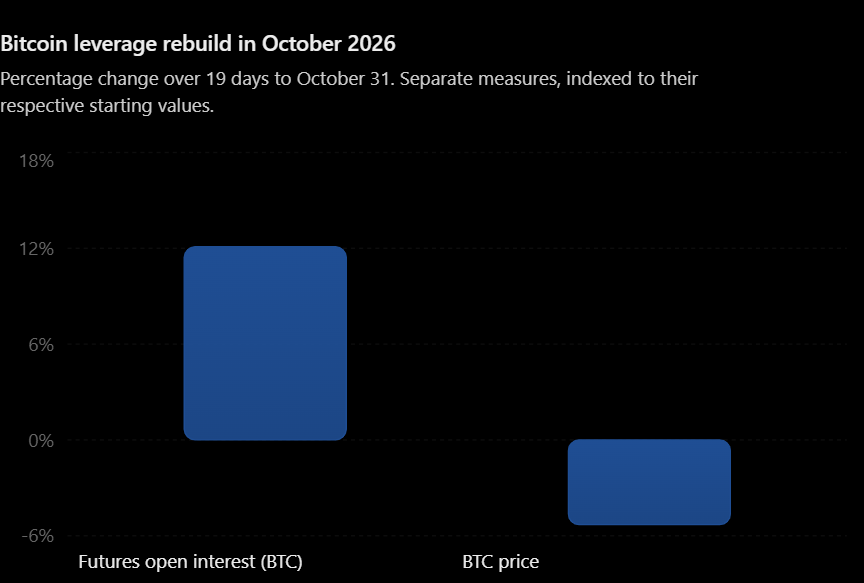
For Aave, the priority is that simpler entry to Bitcoin credit score might add one other supply of hypothesis.
Finally, the transfer by Aave to integrate Bitcoin comes at a time the place DeFi wants liquidity. Nonetheless, its affect stays to be seen nonetheless. Whereas the mixing might entice early lenders and stablecoin deposits, there’s a danger that top ranges of demand might come from hypothesis and trigger additional volatility out there.
Thus, Aave could unlock a brand new supply of liquidity. Nonetheless, turning that liquidity into DeFi progress would be the take a look at.
Remaining Abstract
- Aave’s Bitcoin integration might carry extra liquidity into DeFi and increase stablecoin borrowing.
- Nonetheless, extra borrowing might additionally gas hypothesis and enhance market dangers.



