
10% to 56%: USDC’s remarkable rise in euro-paired stablecoin trading

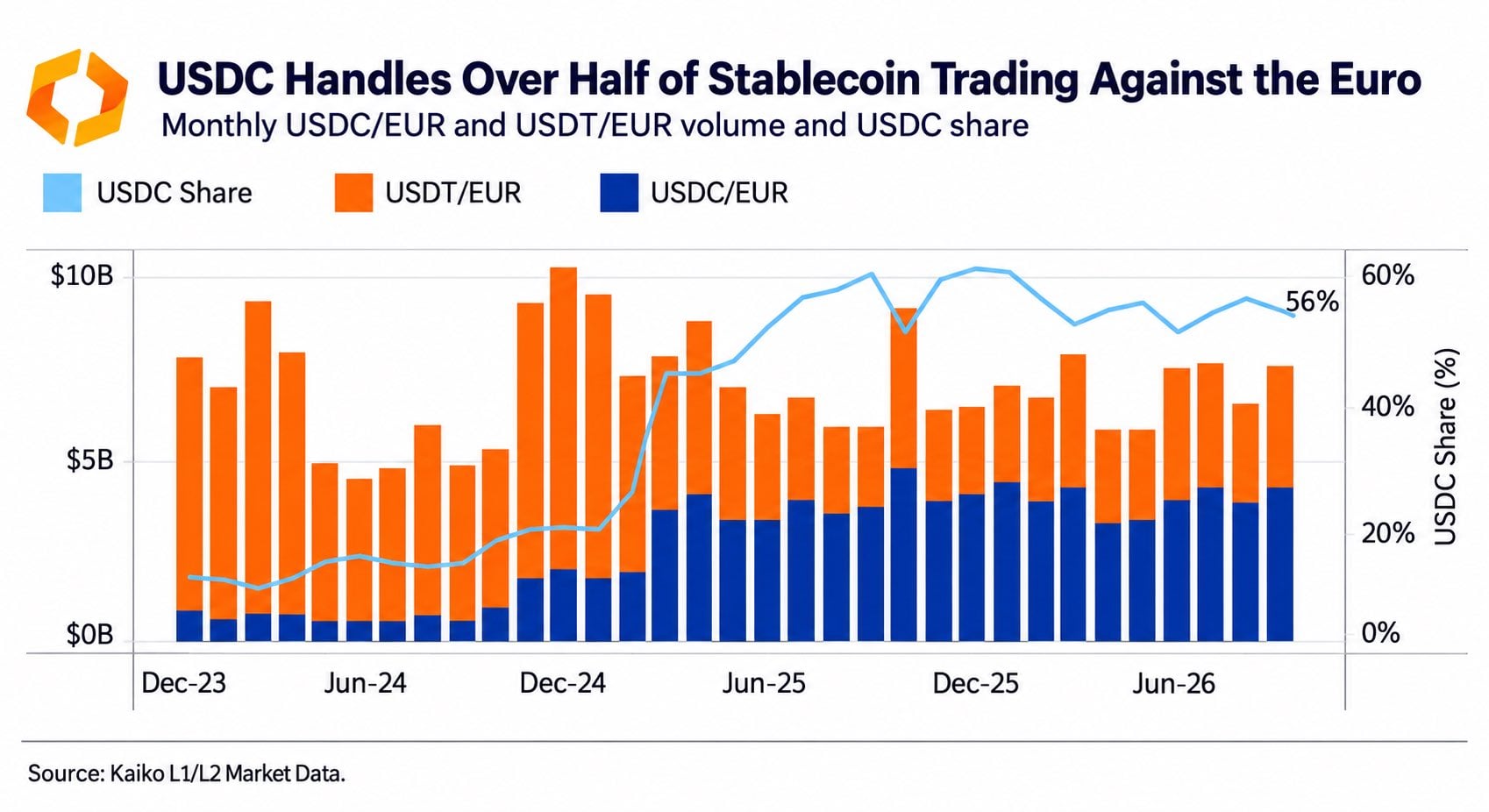
Since December 2023, USD Coin [USDC] has elevated its market share of euro-paired stablecoin commerce from 10% to 56% as of October.
Whereas at the finish of 2024, euro-paired stablecoin commerce quantity reached ranges close to $10 billion per 30 days earlier than declining in subsequent months.
On account of MiCA restrictions on Tether [USDT], the quantity of transactions utilizing USDC elevated. This gave USDC a bonus because it pushed extra buying and selling exercise towards USDC.
Julia Kovalchuk, Head of B2B Product at Paybis, a MiCA-licensed crypto and fiat infrastructure supplier, instructed AMBCrypto in an unique interview,
After MiCA, USDC grew from about 21% to 75% of stablecoin quantity amongst our payment-firm purchasers in a 12 months. The US leans towards USDC too, whereas USDT nonetheless dominates buying and selling and rising markets. Winners are regional and break up by use case – USDC is the default alternative for enterprise fee corporations, traditional-finance on-ramps, and controlled custody in each the EU and the US.
Particularly, since Tether had been denied entry to euro markets, euro-paired USDC order books now have 40% extra depth than these of USDT/EUR order books.
Subsequently, bigger euro-paired stablecoin trades had been in a position to be executed with out inflicting as a lot value motion.
This offers USDC a bonus for merchants changing euros into dollar-backed stablecoins. However, the international provide of USDT is 2.5 instances bigger than that of USDC.
The 56% stage of euro-paired buying and selling of USDC, nonetheless, signifies how regulation might be able to transfer buying and selling exercise and liquid property from one stablecoin to one other.
MiCA guidelines give USDC an edge over USDT in Europe
The shift in market management demonstrates a a lot broader development of adjustments occurring within the European regulatory setting.
MiCA established a July 2026 deadline for all stablecoin issuers to acquire EU authorization and show they adjust to reserve and supervision necessities.
Nonetheless, Tether’s USDT stays unauthorized. Nonetheless, Circle acquired authorization through a French electronic-money license. In response to the rules, Coinbase started proscribing USDT buying and selling for its European clients.
AMBCrypto requested Kovalchuk what compliance means in a world ruled by MiCA-style rules. She responded,
In Europe, liquidity is simple to search out. A license takes years and expensive authorized work, so many smaller companies plug into licensed infrastructure like ours. The US GENIUS Act, Hong Kong’s Stablecoins Ordinance, and the UAE’s fee token guidelines level the identical manner.
Coinbase can be changing any excellent quantities of non-compliant USDT for its European clients round the thirtieth of October. In the meantime, the European Banking Authority designated USDC a major e-money token in mid-October, bringing it underneath direct supervision.
Subsequently, these rules are additionally establishing a framework for a way exchanges can service European customers.
Ethereum stablecoin addresses surpass 300M
The Ethereum [ETH] stablecoin ecosystem has continued increasing, reaching over 300 million holder addresses. Nonetheless, the proven fact that there are over 300 million holder addresses doesn’t robotically imply that there are as many distinctive and energetic customers.
Roughly three-quarters of these holders reside on layer two networks. This highlights the position that Layer 2 networks have performed in rising entry to stablecoins.
When requested if stablecoin beneficial properties on Layer 2s translate to actual adoption or simply balances that circulate again to L1, Kovalchuk famous,
A few of each. A part of L2 quantity continues to be buying and selling balances shifting again to exchanges. The expansion to observe is repeat use: payouts, service provider settlement, and payroll. As soon as the identical companies choose L2 each week, that L2 has grow to be a fee rail.
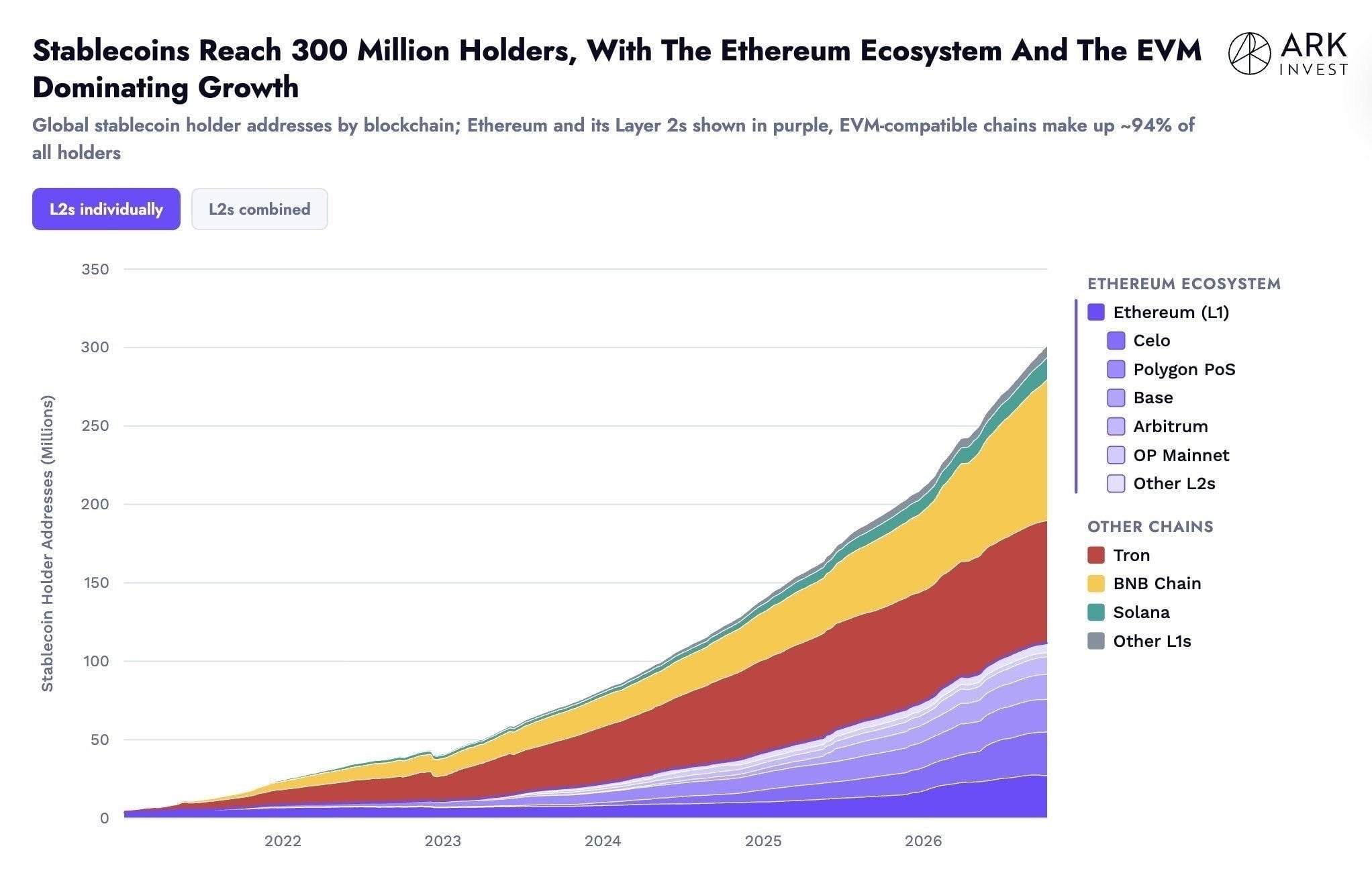
Decrease charges related to layer two networks make it cheaper for people to switch funds utilizing stablecoins. Elevated ranges of community utilization could point out that people usually tend to make the most of the identical stablecoin a number of instances.
But when just a few regulated issuers maintain many of the market, who carries the chance when one fails? Based on Julia,
Holders carry the chance, which is why MiCA’s reserve and redemption guidelines matter. Europe has moved from one dominant stablecoin to a different, so focus is price watching. Companies ought to ask their platform what number of stablecoins it helps and the way rapidly it may swap if one is restricted.
Collectively, these tendencies might form future competitors between USDC and USDT. In the end, lasting management will rely upon regulatory entry, deep liquidity, and sustained person exercise.
Remaining Abstract
-
USDC reached 56% of euro-paired stablecoin buying and selling as MiCA guidelines restricted USDT.
-
Ethereum surpassed 300 million stablecoin holder addresses, with Layer 2s accounting for 75%.