
Russia to ban P2P crypto trading from July 2027 – Here’s why

Russians have simply eight months to commerce Bitcoin [BTC], Ethereum [ETH], and different crypto property with one another.
Ranging from the first of July, 2027, this direct crypto buying and selling amongst friends that doesn’t want a regulated third celebration, also referred to as peer-to-peer (P2P) buying and selling, will change into unlawful.
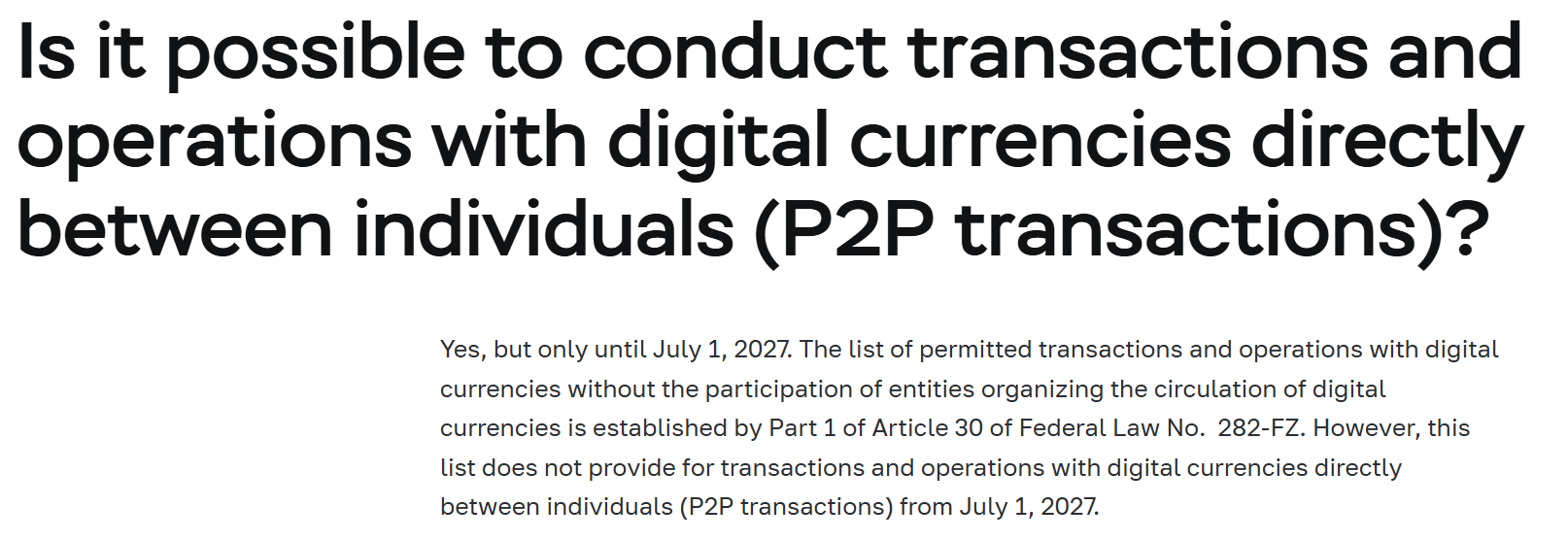
That is a part of Article 30 of the Federal Legislation No. 282-FZ (On Digital Currencies and Digital Rights). The laws was signed into legislation in August by President Vladimir Putin and have become efficient on the first of September 2026.
The truth is, the identical framework allowed a brand new licensing regime for companies and banks that wish to function crypto exchanges and act as digital asset custodians. Already, Russia’s largest financial institution, Sberbank, has obtained two licenses and plans to supply crypto buying and selling from December.
Whereas the brand new Russian crypto regulation regime might speed up institutional adoption, the strict guidelines in opposition to P2P and self-custody transfers might squeeze out some retail buyers.
Why is Russia banning P2P and self-custody crypto transfers
Per the brand new guidelines, crypto buying and selling will solely be permitted through “entities organizing the circulation of digital currencies” or regulated platforms. That guidelines out P2P transfers.
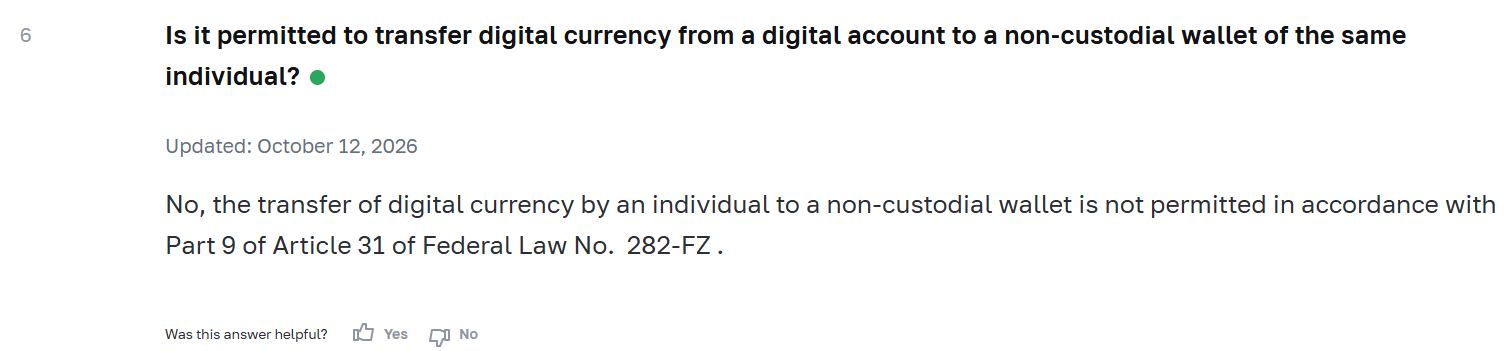
Moreover, withdrawals to self-custody are banned. Russian customers can ship property from self-custody wallets to regulated entities. However they will’t transfer the funds to self-custody wallets. Not like P2P transfers, which might be outlawed by 2027, the self-custody withdrawal ban is already efficient.
International stablecoins similar to Tether’s USDT are permitted for public buying and selling on regulated platforms. Put merely, the Russian authorities could have full visibility into crypto capital flows, together with custodied property.
Curiously, killing P2P and self-custody withdrawals removes crypto blind spots that the majority international regulators try to deal with.
For Russia, the tight guidelines additionally embrace a cap for retail crypto investments at $3.5K per yr. Crypto won’t be used for funds domestically in Russia, however it will likely be allowed for cross-border and worldwide commerce.
In different phrases, Russia needs to rein in capital flight by limiting residents from shifting funds to offshore and self-custody platforms.
This will even guarantee higher transparency and scale back tax evasion. On the identical time, importers and exporters might be allowed to make use of crypto for worldwide commerce, more likely to bypass sanctions.
International P2P crypto transfers surge 300% to $230B
Globally, Brazil, Thailand, the EU zone, and different jurisdictions are adopting practically related tight P2P and self-custody transfers. However they search to cope with anti-money laundering, fraud, and tax evasion, making their coverage incentives barely completely different from Russia’s.
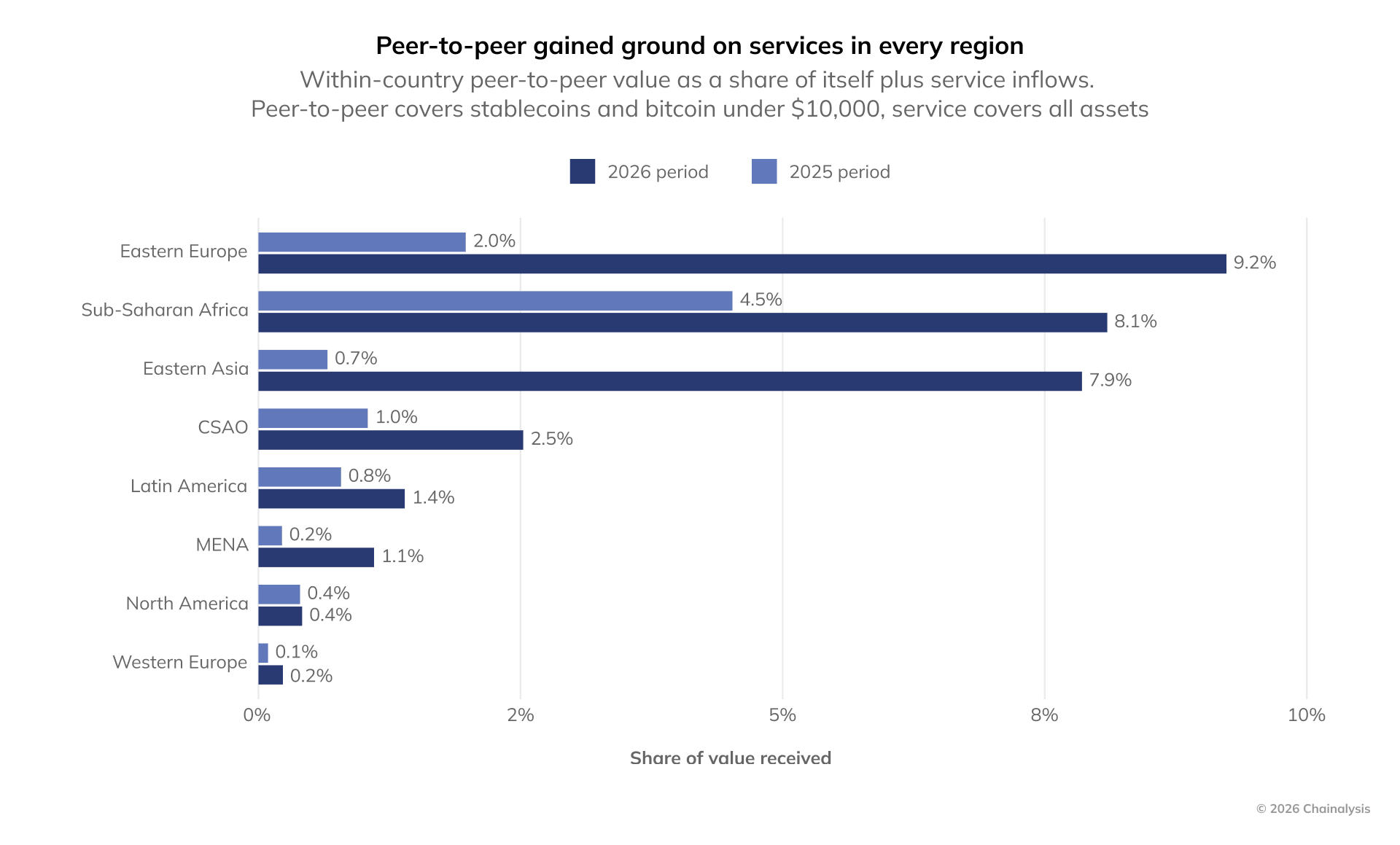
That mentioned, international P2P and private pockets flows elevated +300% to $228B up to now yr, in response to Chainalysis. This underscores rising consumer mistrust within the conventional system and controlled entities. However governments wish to crack down exhausting on this loophole.
Closing Abstract
- Russia to ban P2P crypto transfers by July 2027.
- International P2P flows elevated 3x to $230 billion in 2026 amid a heavy authorities crackdown.