
Rethinking crypto risk — Here’s why ONE factor doesn’t tell the whole story

Traders have a behavior of gauging crypto by a single danger framework. Nevertheless, at present, that framework not captures how the market works.
Bitcoin’s [BTC] every day worth fluctuations are about thrice wider than the S&P 500’s, with way more excessive strikes in each instructions. Nevertheless, the realized volatility of Bitcoin has declined over time to the extent of particular person large-cap U.S shares.
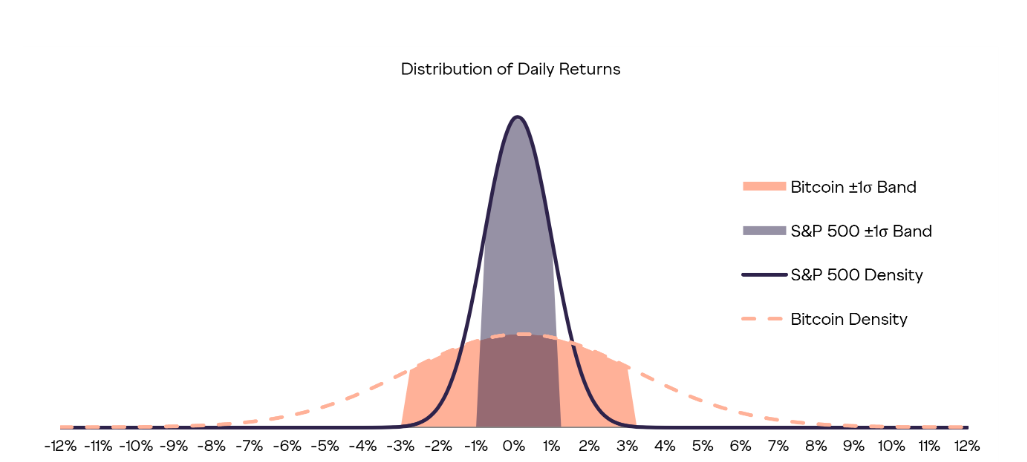
So, traders ought to pay attention to three issues — the place returns come from, how they match inside a portfolio, and the way crypto has grown far past Bitcoin.
Massive swings work each methods
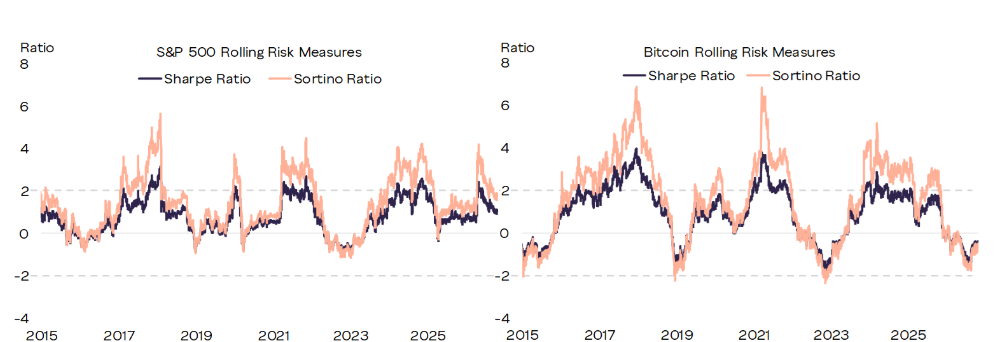
The standard risk tools like the usual deviation or the Sharpe ratio don’t care how a lot cash you make or lose. That leaves a blind spot for Bitcoin as most of its long-term positive factors come from only a handful of buying and selling days.
Bitcoin has averaged 60% per 12 months during the last three years. For those who take away its ten greatest days, that quantity drops to 7%. For those who take away its ten worst days, the quantity jumps to 197%. That’s as a result of massive drops are sometimes adopted by massive rebounds, so traders who attempt to keep away from unhealthy days can simply miss the very best ones.
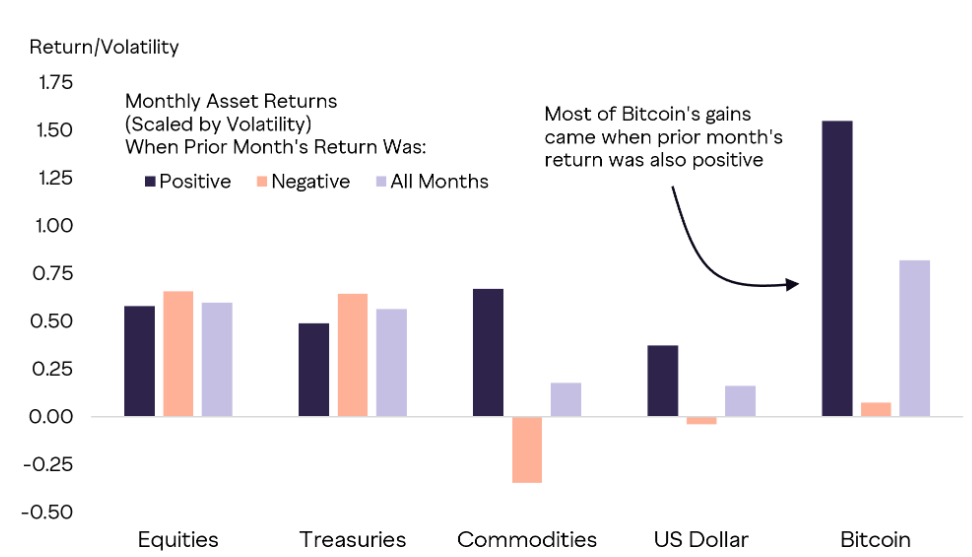
Momentum counts as nicely. Bitcoin’s positive factors are likely to pile on high of one another, and Bitcoin runs much better after months of profitable than months of shedding. Throughout sturdy rallies, the Sortino ratio can rise nicely above regular danger scores. Largely as a result of it solely measures returns towards draw back volatility, not upside volatility.
Notably, Bitcoin has dropped by 50% or extra seven occasions since 2011. However if you embrace the volatility of beginning, Bitcoin’s falls look extra like shares and bonds.
In actual fact, even “low danger” bonds have been falling for some time in recent times.
Why crypto could possibly be a portfolio match?
Whereas massive worth strikes will be alarming on their very own, portfolio managers care most about how an asset behaves when put along with the opposite property they personal. Adjustments in shares, bonds, and the personal market are largely pushed by frequent financial components. Nevertheless, these components clarify the adjustments in Bitcoin a lot much less.
Cryptocurrencies, together with Bitcoin, have traditionally proven low correlation with conventional measures than with one another. That is the case, regardless that correlations can improve during times of market stress.
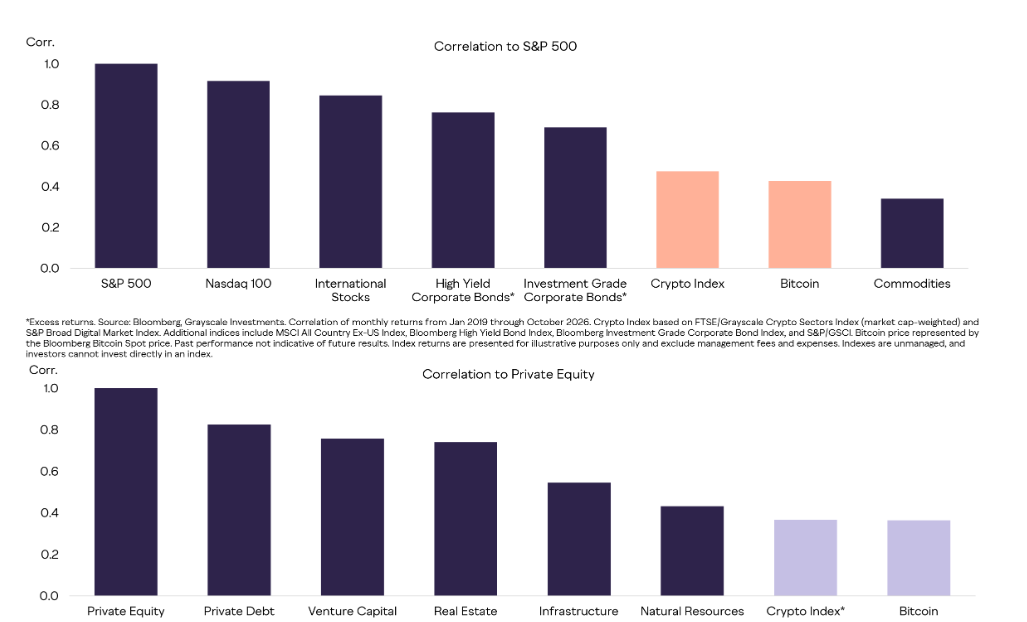
Giant organizations have taken this into consideration too. As an example, J.P. Morgan Asset Administration, a company with $5 trillion in property, launched Bitcoin into its 2027 outlook, estimating a ten% per 12 months return within the coming ten years. This correlates by solely 33% with main U.S. equities, even lower than worldwide equities, company bonds, and hedge funds, even when there’s 55% volatility.
This supplies a singular mixture of each excessive anticipated returns and little correlation with core equities. Historical past proves that together with a small portion of Bitcoin in a median institutional portfolio can improve returns and effectivity with out growing general danger or most losses.
Notably, Mike Belshe, CEO of BitGo, not too long ago identified JPMorgan’s altering perspective on crypto. He mentioned,
Let that sink in. The world’s largest financial institution, lengthy crypto-skeptical, is now publicly supporting crypto market construction laws. It is a completely different ballgame.
Crypto is not only Bitcoin
One other mistake is treating crypto as a single Bitcoin wager. The trendy panorama of crypto contains good contract platforms, decentralized finance, shopper purposes, and synthetic intelligence. Every having its personal distinctive customers and economics.
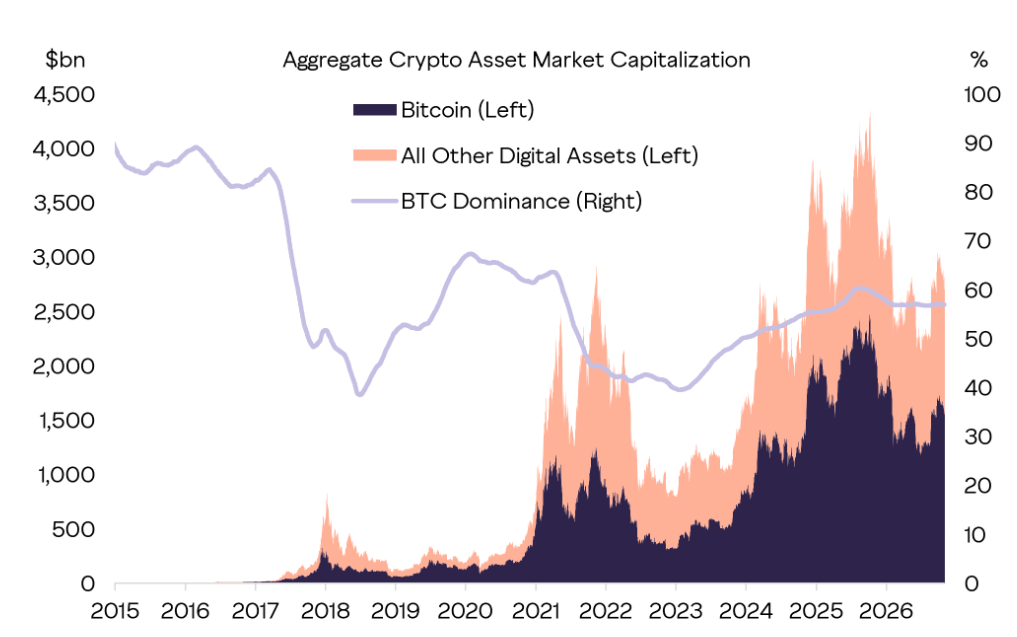
During the last three years, Bitcoin has accounted for almost 50% of volatility in returns on all main crypto sectors, whereas correlations amongst sectors have decreased.
Out of the highest 10 largest non-stablecoin crypto property by market cap, six completely different tokens have been main returns on a quarter-by-quarter foundation during the last two years. Bitcoin has by no means led as soon as.
Why danger shouldn’t be the one issue
None of this suggests that crypto is risk-free although. Particularly since a rally might unwind shortly. Quite the opposite, danger is just not one thing that may be boiled down to at least one easy determine.
A uniform know-how about crypto implies understanding of a number of components — volatility of the asset, distribution of returns, correlation with the remainder of a portfolio, and the efficiency of assorted sectors individually.
Subsequently, in actuality, as a substitute of making an attempt to miss any worth fluctuations, it is very important view them with a correct perspective.
Quite than discussing the volatility of crypto per se, one ought to consider what sort of dangers it introduces, what dangers from one’s portfolio it offsets, and what extra sources of revenue seem exterior of Bitcoin.
Closing Abstract
- Customary danger instruments misrepresent Bitcoin since its returns depend on key days regardless of stabilizing volatility.
- Crypto has expanded past Bitcoin into DeFi and AI, displaying decrease cross-sector asset correlation.