
Ethereum’s decentralization model is the answer to an AI arms race: Vitalik Buterin

Is rising AI threat setting the stage for wider blockchain adoption? Vitalik Buterin actually thinks so.
Talking at Devcon 8 in Mumbai, India, Ethereum’s co-founder stated that centralizing AI instruments may result in an AI arms race. So how can this be a chance for blockchain?
Structurally, blockchains function via decentralized networks, lowering dependence on a single entity. However centralized networks undergo from single factors of failure, that means that an assault may take down the entire community.
Decentralized networks similar to Ethereum cut back this threat by spreading management throughout a number of members. Naturally, the query turns into: Might rising AI-driven dangers strengthen Ethereum’s long-term funding case?

Apparently, on-chain information is already backing this setup.
In line with ValidatorQueue, the variety of ETH staked on the Ethereum blockchain has reached a brand new all-time excessive of 44.3 million, which now accounts for almost 36.3% of the entire provide.
By locking up ETH, customers are proving their dedication to securing the community, additional strengthening its relevance as demand for decentralized infrastructure grows amid rising AI-driven dangers.
That stated, Ethereum [ETH] just isn’t the one decentralized community. The larger query is whether or not its established ecosystem and community safety give ETH an edge in capturing this rising demand.
Rising AI dangers put Ethereum’s long-term worth proposition in focus
Ethereum’s community safety brings its long-term funding potential into focus.
The logic is easy: Vitalik Buterin has raised the issues in regards to the risks of centralized AI and launched the idea of Defensive Decentralized Acceleration, which is predicated on open-source software program, reliable {hardware}, and cryptography.
This might open a brand new development avenue for Ethereum, making decentralized infrastructure a stronger consideration for long-term traders constructing their crypto portfolios.
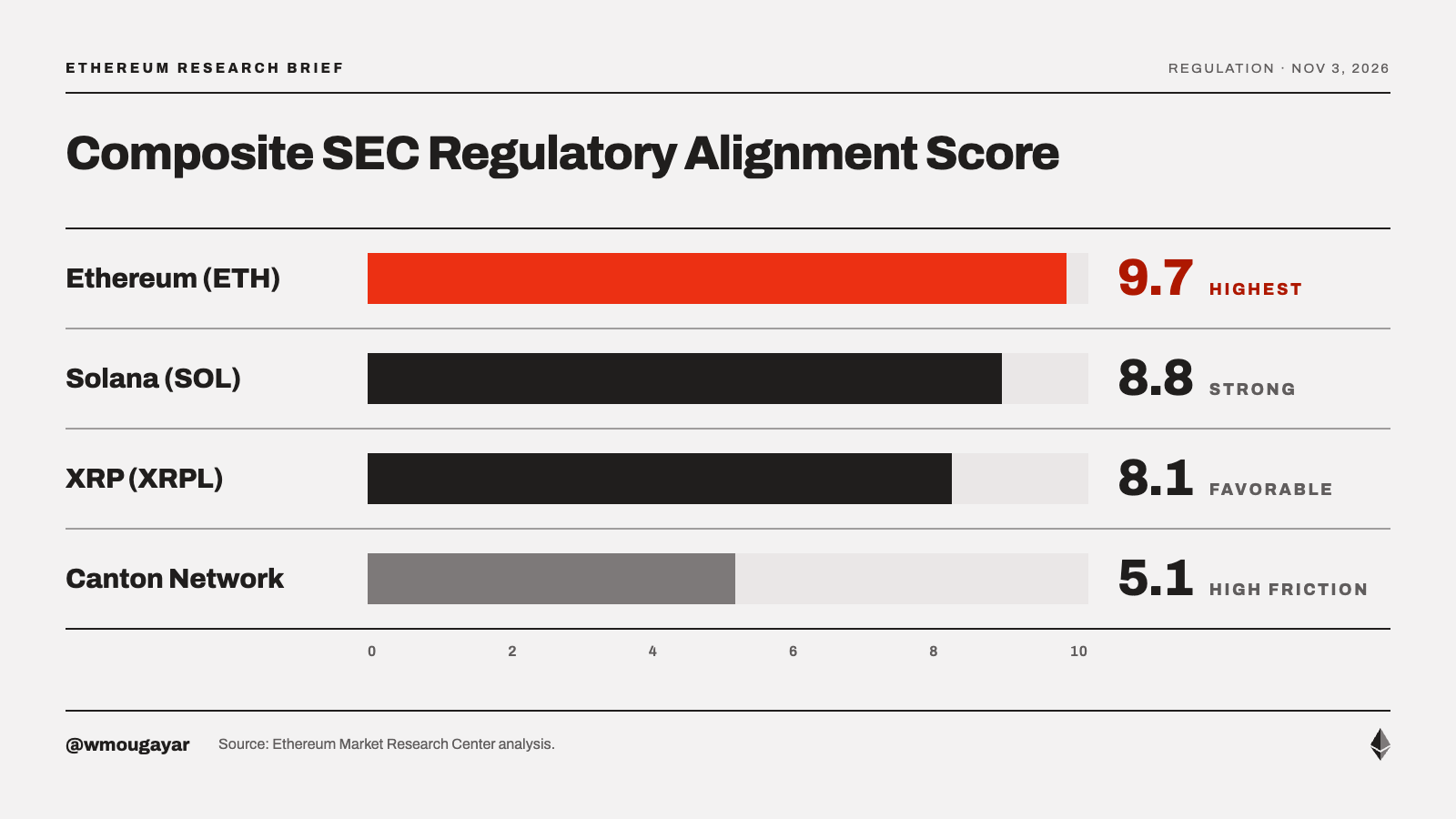
Notably, the timing is fascinating. A latest evaluation utilizing the SEC’s crypto steering discovered that Ethereum was essentially the most decentralized (9.7), adopted by Solana (8.8) and XRP (8.1).
This performs into the narrative round Ethereum’s decentralization. As demand grows for safe infrastructure, on-chain information is already exhibiting Ethereum as essentially the most decentralized possibility.
On this context, Vitalik Buterin’s issues round centralized AI could possibly be greater than only a warning.
As a substitute, it highlights how the market could also be transferring in direction of a extra decentralized infrastructure and can play to Ethereum’s benefit to capitalize on elevated demand for open networks.
So, whereas this doesn’t assure ETH worth appreciation, it provides one other long-term adoption narrative to its funding case.
Ultimate Abstract
-
Rising AI dangers may improve demand for decentralized networks like Ethereum.
-
Rising ETH staking and Ethereum’s robust safety may help its long-term funding case.