
Fake election polls expose a Kalshi loophole that could leave traders paying for fraud
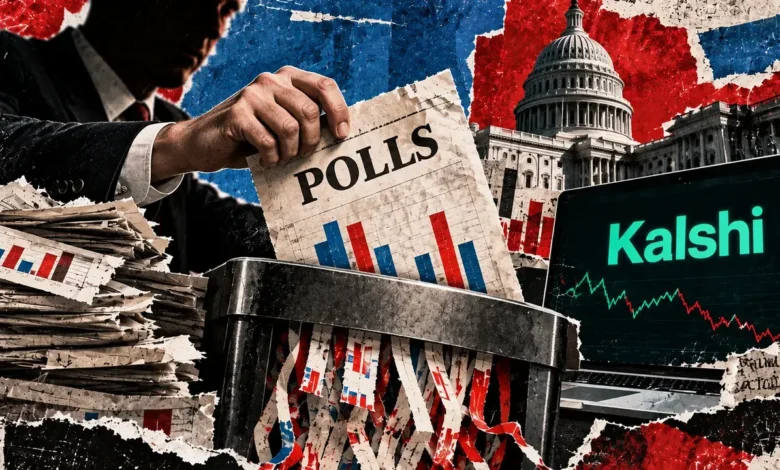
Polling agency Wedgewood admitted on Oct. 20 that it fabricated most of its election surveys, and VoteHub, one of many aggregators that carried its outcomes, can also be the info supply for recurring Kalshi contracts.
Kalshi’s September 2025 regulatory submitting names VoteHub because the supply company for these contracts and states that “revisions to the Underlying made after Expiration won’t be accounted for in figuring out the Expiration Worth.”
The 2 details elevate a query about what occurs to a settled contract when the polling quantity behind it’s later withdrawn or discovered false.
Researchers at FiftyPlusOne requested raw data from Wedgewood’s Mississippi Senate survey and located inconsistencies in respondent identifiers and transaction data. They commissioned a comparability survey by way of the identical supplier, Pollfish, and its data seemed materially completely different.
Wedgewood then admitted the fabrication whereas describing one Nebraska ballot as authentic. VoteHub’s head of information science, Zachary Donnini, stated he spoke with a Wedgewood consultant before including the firm’s polling, and that VoteHub graded Wedgewood a D and included its information anyway.
The Guardian reported that VoteHub was among the many polling databases that carried the outcomes.
What Kalshi’s submitting says
The Sept. 12, 2025 certification for Kalshi’s VOTEHUBAPPROVE contracts designates VoteHub’s time-adjusted polling average as the underlying and fixes the settlement worth at expiration.
A hard and fast statement time is bizarre in occasion contracts, as a result of merchants want a definitive reference. The design additionally ties settlement to the reliability of the supply information accessible at that second.
A separate provision says that if the related VoteHub common is lacking, the contract makes use of the latest eligible common earlier than the desired date. Remedy of a later retraction below that fallback falls to the rulebook.
Kalshi’s Oct. 20 generic congressional poll contract, KXVHGCB-26OCT20, resolves Sure when VoteHub’s time-weighted Democratic-minus-Republican margin matches a specified proportion on the statement time.
It covers what a VoteHub measure will learn at a exact second and units the election winner apart. Merchants maintain publicity to a 3rd social gathering’s methodology, publication schedule, and correction procedures.
The 2025 submitting describes a reference studying on the first accessible 10 a.m. Japanese studying previous the desired date, and the Oct. 20 market web page specifies 5:05 p.m. Japanese the identical day, so Kalshi’s current-series rulebook is the doc to acquire.
For now, the submitting establishes that the revision exclusion exists, and its utility to the October collection awaits affirmation.
Info strikes in each instructions
VoteHub’s 35-page methodology says its Full forecasting mannequin combines polling, fundamentals, knowledgeable assessments, and Kalshi costs.
Market weight varies by race, with extra affect the place contests are aggressive or polling is sparse, and it has a cap. A separate Legacy mannequin runs on polling and fundamentals, and the doc acknowledges that feeding market costs into forecasts consumed by merchants can create suggestions loops.
The settlement reference is a polling common, and the forecast is a special information product. The methodology locations market costs within the forecast and polling within the common, which retains the settling common by itself inputs.
The sensible concern for merchants is whether or not a polling statement, a mannequin forecast and a tradable likelihood keep clearly separated when all three seem in the identical data setting.
What a correction would imply on Kalshi
A contract requiring 8% resolves Sure when the polling common reads 8% on the statement time. If the supply later corrects the studying to 7.8%, the exclusion of post-expiration revisions retains the unique settlement, assuming the rule operates as written.
Settlement certainty is the profit, and a payout constructed on a quantity later proven to be fabricated is the price. The strain is sharpest for a fabrication than for an bizarre methodology replace.
Whether or not this occurred stays undocumented within the public file. Wedgewood’s identified fabricated surveys lined state races, and the instance contract tracks a nationwide common, so any impact of Wedgewood information on that common or on a payout stays unshown.
An archived web page for the Oct. 20 contract displayed inconsistent quantity figures throughout snapshots, so the article omits them.
In August, the Related Press reported {that a} Kalshi contract tied to a candidate moved about two cents inside quarter-hour of a fabricated Los Angeles mayoral ballot from Median Methods.
A cluster of Polymarket accounts traded in the identical route shortly afterward, and AP’s reporting left the trades’ possession and any income undetermined. That case includes a contract on an election end result and sits aside from settlement in opposition to a polling common.
The place this goes from right here
If Kalshi confirms which rulebook governs the October collection, archives settlement inputs with timestamps and describes a dispute path for fabricated supply information, the VoteHub contracts maintain their certainty alongside a documented safeguard.
VoteHub may add worth by publishing which Wedgewood surveys entered its averages and once they had been eliminated.
If a contract settles on a studying later withdrawn and the exclusion rule blocks any adjustment, the primary payout constructed on discredited information would check each change and aggregator.
Election contracts will multiply towards Nov. 3, and every one rests on third-party information screened earlier than settlement turns into last.
Three solutions from Kalshi would shut the open factors: which rulebook governs the October collection, whether or not any contract has settled on a later-corrected determine, and whether or not a settlement might be reopened as soon as fabrication is confirmed.