
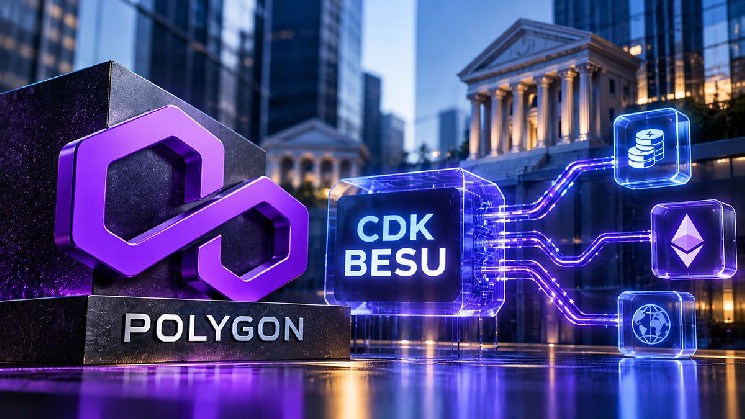
Polygon Launches CDK Besu to Connect Institutional Private Chains to Liquidity
Till now, connecting a non-public Besu-based blockchain to different networks required customized integrations, usually via bridges that relied on teams of signers to authorize transfers.
With CDK Besu, the connection to Agglayer is inbuilt from the primary block. Belongings can transfer between related networks, with transfers settled on Ethereum utilizing zero-knowledge cryptographic proofs.
Establishments retain management over their validators, entry permissions, and approved members. As well as, transaction knowledge stays inside their non-public infrastructure and isn’t printed on Ethereum.
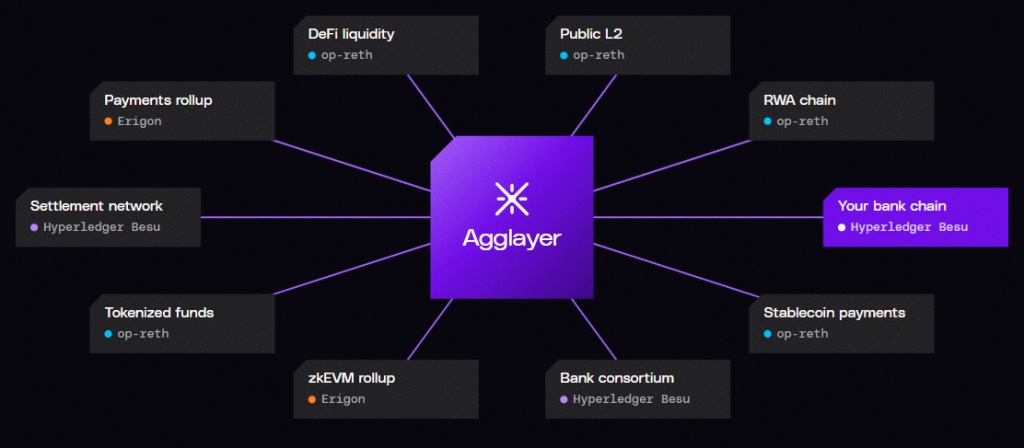
Polygon Connects Non-public Networks to Agglayer
CDK Besu makes use of the QBFT consensus mechanism, which permits a recognized set of validators to approve blocks and obtain quick finality.
This configuration is designed primarily for banks, monetary infrastructure suppliers, and consortia that want to manage participation of their networks.
By means of Agglayer, establishments can switch property to different related blockchains, together with public networks that present liquidity for stablecoins and tokenized property.
The infrastructure maintains a single canonical model of every asset throughout networks. This prevents the identical token from having a number of representations created by totally different bridges.
For instance, a financial institution might situation tokenized deposits by itself blockchain and permit shoppers to switch them to a different community to buy shares in a tokenized cash market fund.
With out this connection, the method might require changing deposits again into conventional cash, transferring funds via banking methods, and buying the asset on the vacation spot community.
With Agglayer, the token can transfer straight between the 2 blockchains, eliminating these intermediate steps.
Polygon additionally said that establishments is not going to must share income generated by their networks’ exercise with the corporate.

Cryptographic Proofs Restrict Cross-Chain Dangers
One of many central elements highlighted by Polygon is the pessimistic proofs system, which makes use of cryptographic proofs to confirm balances related to transfers between networks.
These proofs forestall a blockchain from withdrawing extra property than it has acquired. In line with Polygon, the mechanism limits the chance of a compromised community affecting funds deposited on different related blockchains.
The proofs are generated via the Succinct Prover Community and, as soon as verified, enable transfers to choose Ethereum.
The system verifies bridge accounting however doesn’t individually confirm each transaction executed inside every non-public blockchain.
Establishments requiring full execution proofs can select one other Polygon CDK configuration based mostly on OP Stack.
CDK Besu additionally consists of mechanisms for consortium-operated networks. Every establishment can run its personal validators and take part in choices about including or eradicating members.
To authorize sure operations connecting to Agglayer, the system can require approval from a minimal variety of members, stopping any single establishment from performing unilaterally.
The answer is already production-ready on Ethereum mainnet, with take a look at and improvement environments additionally obtainable.
Polygon printed the deployment directions and open-source elements wanted to implement the infrastructure. It additionally confirmed that establishments already working Hyperledger Besu networks will be capable to join them to Agglayer with out having to construct a brand new blockchain from scratch.