Crypto Strategic Reserve: How the U.S. Plan Works
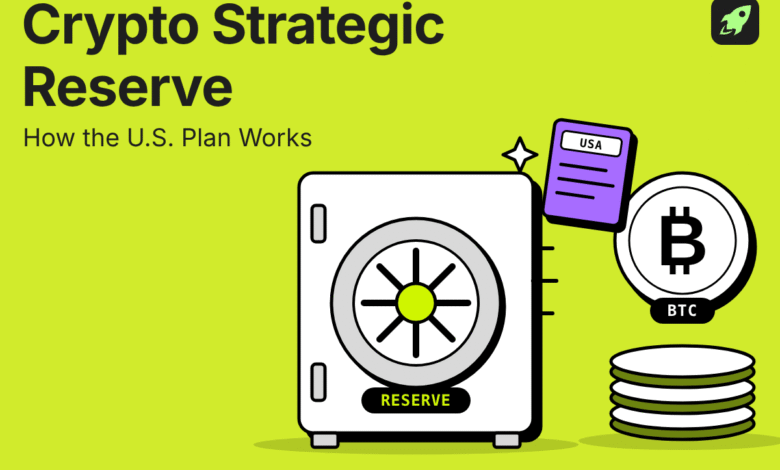
A crypto strategic reserve is a pool of digital property {that a} authorities holds for long-term coverage targets somewhat than for buying and selling. The U.S. model, created by an govt order on March 6, 2025, is 2 separate swimming pools: the Strategic Bitcoin Reserve for BTC and america Digital Asset Stockpile for each different coin. Each are full of crypto the federal government already owns by way of closing courtroom forfeitures and civil penalties. Neither one buys cash on the open market right now.
As of October 2026, the construction exists on paper, however the authorities nonetheless hasn’t revealed an audited steadiness, and officers are nonetheless deciding which division ought to run it. This information explains what the order says, which cash qualify, who manages them, and what may change subsequent.
What Is a Crypto Strategic Reserve?
The concept borrows from older state reserves. The U.S. Strategic Petroleum Reserve shops oil for provide shocks, and central banks maintain gold and foreign currency echange to again their steadiness sheets. A crypto strategic reserve applies the identical logic to digital property: the state retains them as a substitute of auctioning them off.
Within the U.S., the time period covers two official autos:
- The Strategic Bitcoin Reserve (SBR) holds eligible Bitcoin solely.
- America Digital Asset Stockpile holds eligible digital property aside from Bitcoin, corresponding to Ether, and follows looser administration guidelines.
Individuals typically name the entire thing “the crypto reserve,” however that label hides the primary design alternative. The White Home treats Bitcoin as a long-term reserve asset and treats every little thing else as authorities property to be managed case by case.
How one can Get Free Crypto
Easy tips to construct a worthwhile portfolio at zero value

How Did the U.S. Plan Turn into Coverage?
The plan got here collectively in three steps over about six weeks. Every step did one thing completely different, and solely the final one set binding guidelines.
January 2025: A Stockpile Was Proposed for Analysis
On January 23, 2025, President Donald Trump signed Govt Order 14178, “Strengthening American Management in Digital Monetary Expertise.” It created the President’s Working Group on Digital Asset Markets, which incorporates the Secretary of the Treasury, the Secretary of Commerce, and different officers.
The order requested the group to judge whether or not a nationwide digital asset stockpile made sense, doubtlessly constructed from crypto the federal government had lawfully seized. It didn’t create a reserve or identify any cash. It solely began a overview.
March 2: 5 Cryptocurrencies Had been Named Publicly
On March 2, 2025, Trump posted on Reality Social {that a} U.S. crypto reserve would come with XRP, Solana (SOL), and Cardano (ADA). In a follow-up submit, he added that Bitcoin and Ethereum could be on the coronary heart of it. The posts moved costs for all 5 cash, however they had been statements, not coverage. They set no guidelines and moved no property.
March 6: An Order Established Two Separate Constructions
4 days later, Trump signed Executive Order 14233, “Institution of the Strategic Bitcoin Reserve and United States Digital Asset Stockpile.” This order defines how the system works. It created two holding autos, set eligibility guidelines, restricted gross sales, and ordered a government-wide accounting.
The order doesn’t listing XRP, SOL, or ADA, and it doesn’t commit the federal government to holding them. Anybody studying in regards to the reserve ought to deal with the March 6 textual content, not the March 2 posts, because the rulebook.
Bitcoin Reserve vs. Digital Asset Stockpile: What’s the Distinction?
Each autos sit underneath the Treasury Division and draw from the identical supply: crypto the federal government already owns. The distinction lies in what goes in and what the federal government might do with it.
| Strategic Bitcoin Reserve | Digital Asset Stockpile | |
| Property | Bitcoin solely | Digital property aside from Bitcoin |
| Supply | Lastly forfeited BTC, or BTC acquired to fulfill a civil cash penalty | Lastly forfeited non-BTC property |
| Can or not it’s offered? | No, deposited BTC is to be saved | Sure, on the Treasury Secretary’s discretion |
| New acquisitions | Finances-neutral methods allowed | Solely by way of forfeiture or penalties, until new govt or legislative motion follows |
| Administrator | Secretary of the Treasury | Secretary of the Treasury |
Briefly, Bitcoin will get a hold-forever coverage, and the opposite cash get odd asset administration.
How Does Crypto Turn into Eligible?
Seizure is simply step one. When brokers seize crypto in a legal case, the federal government controls it, nevertheless it doesn’t personal it but. The cash should be returned to the defendant or victims. Possession transfers solely after closing forfeiture, when a courtroom case ends, and the property legally passes to america.
Below EO 14233, Bitcoin qualifies for the reserve if Treasury holds it and it was:
- lastly forfeited in a legal or civil continuing, or
- acquired in satisfaction of a civil cash penalty imposed by a federal company.
Non-Bitcoin property qualify for the stockpile by way of closing forfeiture. Each classes exclude property that the federal government wants for different authorized obligations, corresponding to funds from the Treasury Forfeiture Fund.
So a headline about brokers seizing a big crypto haul doesn’t imply the reserve grew. Patrick Witt, then govt director of the President’s Council of Advisors for Digital Property, mentioned in Could 2026 that cash tied up in energetic circumstances keep pending till forfeiture is closing, and a few might go to victims as restitution as a substitute of to the reserve, according to CoinDesk.
Which Cash Are Concerned?
The reply is determined by which doc you learn. The March 2 posts named 5 cash. The March 6 order names just one.
Bitcoin’s Designated Position
Bitcoin is the one asset with its personal reserve. The order factors to Bitcoin’s mounted provide of 21 million cash, notes that it’s typically referred to as “digital gold,” and argues that international locations that construct a reserve early achieve a strategic benefit. Each eligible BTC goes into the Strategic Bitcoin Reserve, the place the order says it shall not be offered.
BTC, ETH, XRP, SOL, and ADA: Introduced Cash Versus Confirmed Holdings
The opposite 4 cash from the March 2 posts get no reserved slot. The order doesn’t require the federal government to carry Ether, XRP, SOL, or ADA, and it doesn’t set a goal quantity for any of them.
Whether or not a selected altcoin leads to the stockpile is determined by whether or not the federal government owns it by way of closing forfeiture. That’s an inference from the order’s standards, not from a printed stock. If the federal government forfeits ETH from a fraud case, that ETH can enter the stockpile. If it by no means forfeits any ADA, the stockpile holds no ADA, no matter what the March 2 submit mentioned. The order additionally bars new stockpile acquisitions past forfeitures and penalties with out additional govt or legislative motion.
How one can Learn a Authorities Holdings Estimate
You’ll see very completely different numbers for the way a lot crypto the U.S. holds. Every measures one thing completely different, so test three issues: the date, the asset scope, and the proof.
- About 200K BTC (March 2025). When the order was signed, White Home crypto adviser David Sacks mentioned the federal government owned an estimated 200K BTC and famous it had by no means accomplished a full audit. That determine was an official’s estimate, not a verified reserve steadiness.
- 28,988 BTC (July 2025). A Freedom of Data Act request returned information exhibiting that the U.S. Marshals Service held about 28,988 BTC, crypto.news reported. This covers one company solely. The IRS, FBI, and DEA also can maintain seized crypto.
- About 328K BTC (2026). BitcoinTreasuries estimates U.S. authorities holdings at roughly 328,372 BTC, a determine TheStreet cited in October 2026. Trackers like this one observe on-chain wallets linked to the federal government and may’t inform seized cash from forfeited ones.
None of those is the quantity deposited within the Strategic Bitcoin Reserve. Authorities-controlled BTC consists of cash nonetheless in courtroom, cash owed to victims, and cash exterior the Treasury. The order referred to as for a full accounting from each company inside 30 days, nevertheless it doesn’t publish a steadiness itself, and no audited determine has been launched.
Can the Authorities Purchase or Promote Crypto?
Sure, inside limits, and the boundaries differ for every car.
Shopping for Bitcoin. The order directs the Treasury and Commerce secretaries to develop budget-neutral methods to amass extra Bitcoin, which means strategies that add no new prices for taxpayers. In March 2025, then-adviser Bo Hines recommended promoting some U.S. gold to fund Bitcoin buys with out new spending. That instruction units no buy quantity, finances, or schedule. As of October 2026, the federal government had not introduced any open-market Bitcoin purchases.
Shopping for different cash. The stockpile can’t develop by way of purchases. It may solely absorb new property by way of forfeiture or civil penalties until the White Home or Congress acts once more.
Promoting Bitcoin. The reserve BTC is to be saved, not offered. This reverses previous apply. In earlier years, the federal government commonly auctioned seized Bitcoin, together with tens of 1000’s of cash from the Silk Street case.
Promoting different cash. The Treasury Secretary can resolve learn how to handle the stockpile, and that discretion consists of doable gross sales.
Exceptions. The order doesn’t freeze each coin without end. It preserves tendencies required by regulation or courtroom order, returns to identifiable crime victims, use for regulation enforcement operations, and equitable sharing with state and native companions. A declare that “the federal government can by no means promote or return any crypto” could be flawed.
Who Manages the Property?
On paper, the Treasury Division runs each autos. In apply, the setup has been slower and extra contested than the order recommended.
Treasury Custody and Company Obligations
The order makes the Secretary of the Treasury accountable for the places of work that management the custodial accounts holding reserve and stockpile property. A custodial account right here merely means an account the place a delegated authorities workplace controls the personal keys on the general public’s behalf. The order doesn’t identify a custody supplier, a pockets sort, or a safety setup.
Custody has confirmed to be an actual subject. The U.S. Marshals Service shops a part of its holdings with Coinbase Prime, and in March 2026, the FBI arrested a contractor accused of stealing greater than $46 million in crypto from Marshals Service custody accounts. Witt cited that case as a motive to centralize the federal government’s crypto underneath one safe construction.
Management can be unsettled. In July 2026, Bloomberg reported that talks had shifted towards putting the reserve underneath the Commerce Division as a substitute of Treasury, partly over whether or not Treasury has clear authorized authority to handle the Bitcoin. The Justice Division’s Workplace of Authorized Counsel was reviewing the choices, Bitcoin Magazine reported. The White Home mentioned it was nonetheless dedicated to the reserve and was weighing the perfect construction.
The Required Authorities-Large Accounting
The order gave each federal company 30 days to report its authorities digital property to the Treasury Secretary and the President’s Working Group, together with custody particulars. Companies holding none needed to verify that too. Treasury additionally had 60 days to ship an analysis of the authorized and funding questions round each autos.
These deadlines handed in April and Could 2025 with out public outcomes. Accounting is an inside administrative course of, and the order doesn’t require Treasury to publish its findings.
Why Create a Reserve and What Are the Dangers?
The administration’s case begins with provide. Bitcoin’s 21 million coin cap means nobody can print extra, and every Bitcoin halving cuts the speed at which new cash seem. The order presents that shortage as a strategic benefit for early holders. Officers additionally argue that earlier auctions of seized BTC value taxpayers billions in misplaced good points, and {that a} single central system could be safer than a patchwork of company crypto wallets.
These are the federal government’s causes. Claims that the reserve will hedge inflation, push Bitcoin costs up, or generate income for taxpayers are predictions, and economists disagree about them. In a February 2025 survey by the College of Chicago’s Clark Middle, not one of the surveyed economists agreed {that a} strategic crypto reserve would profit the U.S. economic system.
The dangers are simply as concrete:
- Bitcoin’s volatility is excessive: it has fallen 50% or extra in previous downturns, and a no-sale rule would require the federal government to journey out each drop. Officers have reportedly requested whether or not the federal government can maintain such a risky asset indefinitely.
- A later president can change or revoke an govt order. With out laws, the no-sale rule has no lasting authorized footing.
- With out revealed balances or proof of reserves, the general public can’t confirm what the federal government holds or the way it secures it.
- Officers’ feedback transfer costs even when no cash change fingers.
When you commerce on these strikes, take into account that coverage headlines are likely to drive short-term swings.
What Is Confirmed, and What May Change?
Confirmed by the March 6 order:
- The Strategic Bitcoin Reserve and the Digital Asset Stockpile exist as two separate autos.
- Solely lastly forfeited crypto, plus BTC acquired by way of civil penalties, qualifies.
- Reserve Bitcoin should be saved, not offered, besides in restricted circumstances.
- The Treasury can handle and promote the stockpile at its discretion.
- Any new Bitcoin purchases should be finances impartial.
Not confirmed, or nonetheless open:
- The steadiness: no audited determine has been revealed.
- The coin listing: holdings of ETH, XRP, SOL, or ADA rely upon forfeitures, not on the March 2 posts.
- Management: experiences in 2026 pointed to a dispute between Treasury and Commerce.
- Management: By October 2026, the White Home crypto council had misplaced its govt director, and no substitute had been introduced.
- Laws: Sen. Cynthia Lummis’s BITCOIN Act (S.954), reintroduced in March 2025, would direct the federal government to purchase 1 million BTC over 5 years. In Could 2026, Rep. Nick Begich launched the American Reserve Modernization Act (ARMA), which might require a Bitcoin reserve for a minimum of 20 years together with proof-of-reserve reporting, Decrypt reported. As of October 2026, neither invoice had turn into regulation.
If Congress passes a reserve invoice, the principles would relaxation on statute somewhat than an govt order, and large-scale purchases may turn into doable. Till then, the reserve grows solely as quick as courtroom circumstances finish in forfeiture.
Closing Phrases
The U.S. crypto strategic reserve is narrower than the early headlines made it sound. It isn’t a basket of 5 cash purchased with tax cash. It’s a Bitcoin reserve full of forfeited BTC, plus a separate stockpile of different forfeited property, each underneath Treasury guidelines the federal government remains to be placing into apply. The Bitcoin aspect has a strict no-sale rule, and the altcoin aspect offers Treasury room to handle and promote. The most important open questions are the actual steadiness, which division runs the system, and whether or not Congress will flip the manager order into regulation.
Disclaimer: Please be aware that the contents of this text should not monetary or investing recommendation. The knowledge supplied on this article is the creator’s opinion solely and shouldn’t be thought-about as providing buying and selling or investing suggestions. We don’t make any warranties in regards to the completeness, reliability and accuracy of this info. The cryptocurrency market suffers from excessive volatility and occasional arbitrary actions. Any investor, dealer, or common crypto customers ought to analysis a number of viewpoints and be conversant in all native laws earlier than committing to an funding.